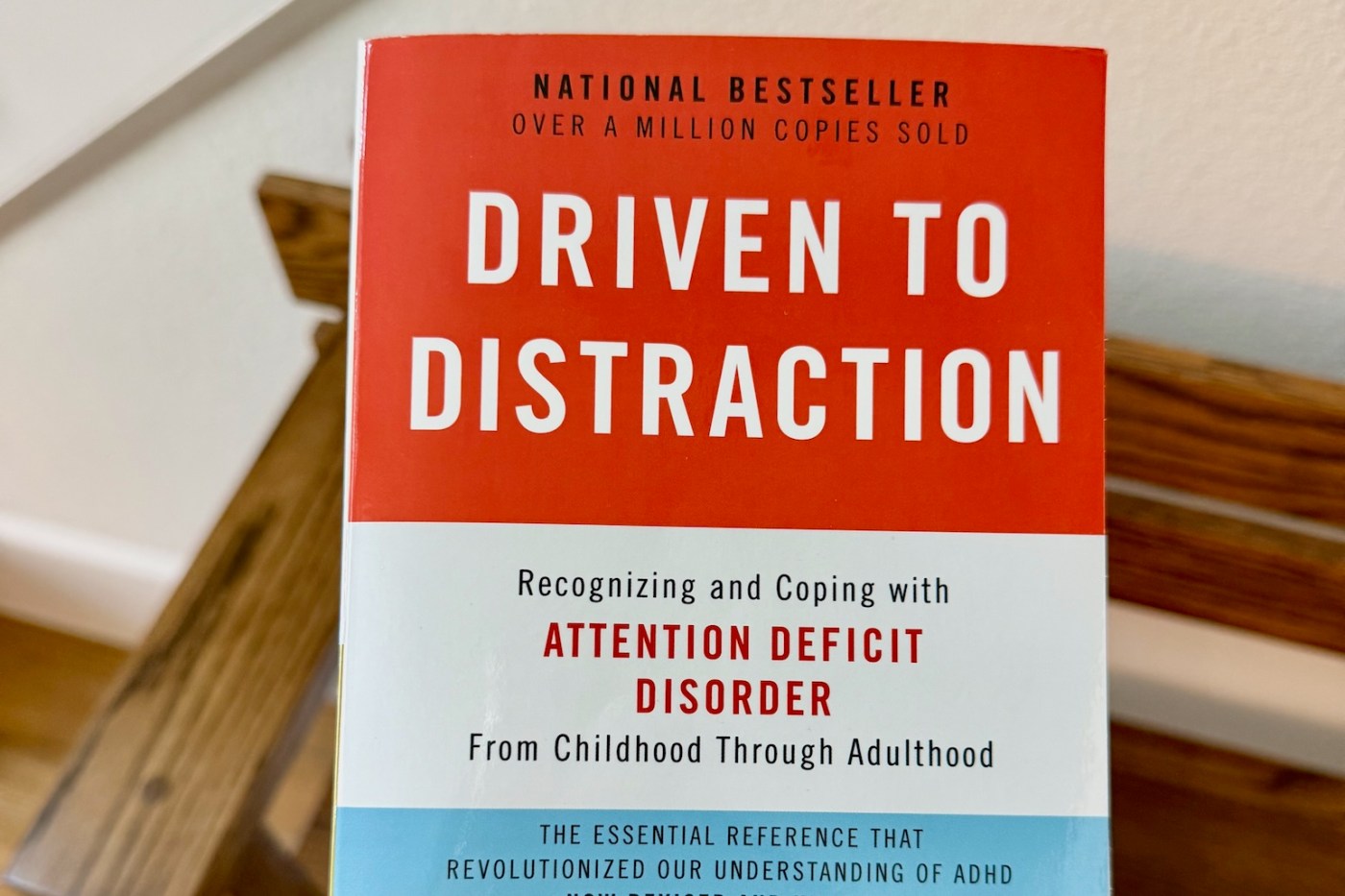
I recently did something I almost never do. I read a non-fiction book. The closest I get to non-fiction in my pleasure reading most of the time is a biography or memoir. I love people stories, but I struggle to read anything that does not feel like an escape from the day.
Recently, I was perusing books in our guest bedroom closet where we keep books we have read or intend to (hope to?) read. My eyes landed on Driven to Distraction by Edward Hallowell, M.D. and John J. Ratey, M.D. For some reason, I reached for it and decided to read it.
What I discovered is I love this kind of book. I’ve always been interested in the human body and brain, so learning more about ADD, which affects millions in the U.S. and world-wide, including my own family, was right up my alley. Granted, I was able to skip some portions (or skim parts) of the book that were not applicable. Overall, however, I was riveted, wondering why I had not read it sooner.
My son has ADD. Neither my husband nor I are ADD, so it was not easy for us to spot initially. He was diagnosed in the second grade, but we did not start medication for him until fourth grade. To be clear, we were not opposed to medication. We simply wanted to learn more about his struggles and see if other supports were beneficial. When his fourth grade math teacher shared that our son was struggling to pay attention even at the teacher’s table, we started medication. It made an immediate difference, although it did not make him a math genius (wink).
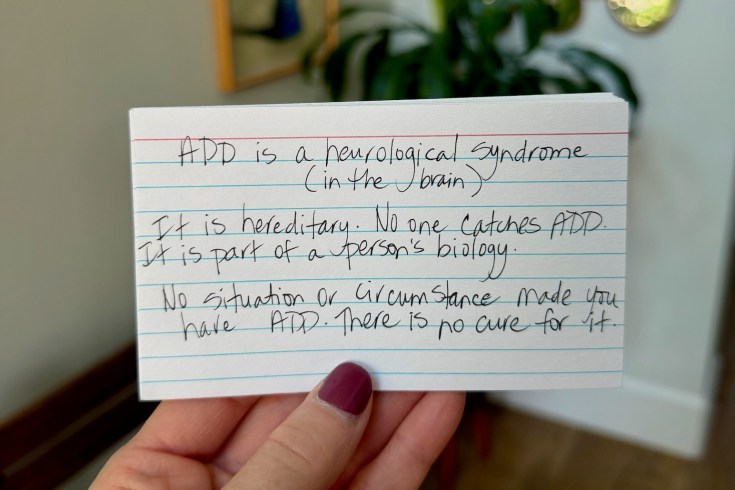
After I finished the book, I made note cards to go over what I learned with my family. Then, I thought, “Why keep this to myself?” So, below is your Cliff’s Notes version of the book. All of this information is very high level. If you want more detail, read the book or do your own research. If you have not read the book but are curious about ADD, I highly recommend it. If you have read it and have additional thoughts to share, please comment below.
What is ADD?
Attention Deficit Disorder is a neurological syndrome, involving the Central Nervous System, including the brain. It is hereditary. No one “catches” ADD, and it is not caused by bad parenting or particular situations or circumstances. As it is currently understood, a person does not typically outgrow ADD. In fact, many adults are being diagnosed with ADD in recent years, including my oldest brother, who was in his later 50s when he was diagnosed.
What are the Symptoms of ADD?
The three main symptoms of ADD are: (1) Impulsivity, (2) Distractibility, and (3) Hyperactivity. A person with ADD might have all three symptoms or just one or two. Our son is ADD with Distractibility.
How is ADD Treated?
The treatment of ADD involves several levels.
First, get a reliable diagnosis. Our son was diagnosed in the second grade by someone in our public school system. We later had him re-assessed in middle school by a team of our own choosing outside of the school system, and they confirmed his ADD diagnosis. He is now in high school and receives appropriate accommodations for his challenges based on the findings in his assessment.
Second, educate yourself about ADD. I admittedly fell short here since I purchased this book and never read it (until now). The more you know, the better you can advocate for yourself (if you have ADD) or your loved one with ADD.
Third, create structure for the person with ADD. This includes lists, reminders, calendar events, timers, and more. Structure on the outside helps the person with ADD feel more organized on the inside. The person with ADD cannot rely on their memory to keep them on track.
Fourth, consider coaching and/or therapy. There are many qualified professionals who can assist the person with ADD. A therapist can help parents in assisting their children with ADD, and a professional can assist the person with ADD in practical skill-building like time management, prioritizing tasks, general organization, and coping with emotions.
Fifth, there are various medications to assist. I won’t go into the types that are available, but it was good for me to understand that medication is just one part of the ADD treatment. Medication does not work for everyone with ADD, but it works wonders for many who do. I like the analogy of medication being glasses for the brain. Glasses help us see, and medication helps the ADD brain function better.
Some ADD Myths
“A person with ADD can’t focus.”
This is false. In fact, a person with ADD can hyper-focus on things they love. I have observed this with my son. When he gets an idea to do something, there is almost no getting him off the task until it is complete.
“ADD is in kids only.”
False. As I stated above, I have observed many older people receiving ADD diagnoses, including my oldest brother. In many cases, these people have coped for years with the disorder. The book describes various cases of adults who have felt like they were a failure, not realizing there are medical reasons they cannot get started on projects, etc.
“People with ADD are not smart.”
Wrong. Many people with ADD are very bright with many interests. They are usually very creative.
“People with ADD are lazy.”
Absolutely not. What often happens is the person with ADD gets overwhelmed by large tasks and projects. They are unable to break the task into smaller ones, so they simply procrastinate. A coach or teacher can guide them through steps to get to their goal(s). They just need a little help prioritizing and getting started.
A Warning about ADD
Those with ADD have a tendency toward addiction because of their impulsive nature and differences in brain chemistry. This can include any number of things like eating, shopping, drinking, gambling, screens and more. The book encourages the person with ADD to take up good things like moderate exercise. I would add several other good addictions: meditation, time outdoors, reading, and spending time with friends and loved ones.
ADD Affects the Entire Family
If you are ADD or have an ADD person in your family, you are nodding your head. We have found ourselves waiting for and frustrated by the ADD person more times than we can count. The truth is, they are not trying to annoy us! The family needs to work together towards solutions. Give everyone a say, and be willing to try someone else’s idea. Try not to get sucked into a battle or stay stuck in old behavior and thought patterns. Remember that ADD is no one’s fault.
ADD Has Sub-Types
The book covers many sub-types of ADD including ADD with Anxiety, ADD with OCD and more. ADD is as complex as the brain itself, and the severity of symptoms vary widely. It is best to allow a professional to properly diagnose your type and provide treatment steps.
Medical Findings
This is the part of the book where I was geeking out. I did NOT understand all of the medical terms, but I loved the information just the same.
One study found the ADD brain metabolizes glucose at a slower rate throughout all regions of the brain but most notably in the pre-frontal cortex. This is the region of the brain that regulates behavior. The frontal lobes orchestrate attention, and they function as the gateway to action.
Glucose is a fancy word for sugar. As I contemplated the findings of this study, I thought of my son eating a bag of candy in front of his computer as he did his homework. I also thought of my brother munching on a carb-y snack as he worked on his laptop. I am surmising both were receiving signals they needed to consume more glucose even if they were not consciously aware of the signals. Or maybe they just like “junk-y” snacks! (wink)
Another study found decreased blood flow to the brain’s right hemisphere. The right hemisphere controls executive functioning and decision-making. Those with decreased right hemisphere activity get lost easily, lose things, struggle to see the big picture, and more. Sometimes in social settings they struggle to read others’ cues.
Life is Making Us ADD
The book talks about pseudo types of ADD. If you have ever lost an hour scrolling social media, you might wonder if you, too, have ADD. There are 100 questions in the book if you’d like to test yourself to see if you might have ADD. However, it is most likely that our fast-moving world is creating a false ADD as we get lost in the onslaught of stimuli and information. Put some time-limits and healthy boundaries in place!
ADD is Complicated
Near the end, the book explains that ADD studies are ongoing, and we continue to make new discoveries and establish better approaches to treatment. The book was first published in 1994, and it underwent a major revision in 2011. If you are hungry to learn more, the authors have written other books including ADHD 2.0 (published in 2021).
Thanks for reading. I hope you found it helpful. I’ve missed writing my personal blog posts. It has been a few years since my last post! Life sometimes gets busy to say the least. Thanks for taking the time to stop by. Hope it won’t be another three years before I write again.


Leave a comment